
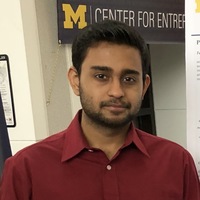
Aditya Iyer
Systems Engineer (MBSE) and Project Manager
Systems Engineer (MBSE) at Shell
Background
Being an innate problem solver and a creative thinker, I approach any task through thorough analysis. I follow a systematic framework to enable the successful implementation of strategies. My natural tendency is to work well in teams and take up leadership roles to guide and lead my team by example. I believe in focus, commitment and harnessing the potential of multi-cultural environments. I would love to connect and discuss mutual experiences and goals. Cheers!
Job experience
- January 2024 - presentSystems Engineer (MBSE)
ShellHouston, TX, USA• Performed functional decomposition and physical mapping via SysML models for biofuel refining& hydrogen production systems
design, reducing overall energy loss by 12% and ensuring compliance with ISO 19880 for operational reliability
• Led the definition& verification of 70+ system requirements in Siemens Polarion for an offshore oil rig’s safety control system to
improve risk mitigation by 25% using FMEA, cost/ value engineering, and RAM (Reliability, Availability, Maintainability) study
• Developed SysML models in Sparx EA to functionally decompose the User Access Management system, reducing access errors by
33% by structuring role-based access (Viewer/ Modeler/ Admin) and transitions (JML process) into Use Case& Activity Diagrams
• Exposure to RAM Studies, CMMS (SAP PM), Aveva Solutions, and Risk-Based Asset Management (RBAM) methodologies for
asset integrity and reliability enhancement in Oil & Gas fields - July 2023 - December 2023Associate Modeling Engineer
ShellHouston, TX, USAFormed a sustainable electro-chemical manufacturing process’s model architecture, created Sub-System Assemblies for the
process being modeled by solving Heat-Mass Balance (input/ output) for the system and chemical system of equations
• Enhanced system reliability by 18% and reduced energy losses by 12% by identifying and optimizing critical process parameters
(pH, particle size) for energy efficiency and throughput, through engineering data analytics and process Fault-Tree Analysis (FTA)
• Engineered the Python computational model (data structures, algorithm, libraries) for real-time process simulation, cleaned
incoming data, and outlined functional& edge testing requirements to support design reliability& satisfy green energy project KPIs - July 2022 - June 2023Engineering& Technology Associate
Accenture (with Saudi Aramco)Dubai - United Arab Emirates• Built 2 business cases for National Grid’s $1M Digital Conversion Program and created an 18% ROI improvement through digital
asset management and data scalability solutions.
• Developed a $500K resource allocation plan for smart services (AI &robotics) for a critical asset with 3 Minimum Viable Products
(MVPs) using the ‘SIMPLE’ framework, and implemented a communication plan for workforce integration via a digitization
• Led offshore asset maintenance engineering& performance data analysis for Saudi Aramco's Digital Twin Initiative, structuring
and cleansing 50+ asset maintenance datasets to derive actionable insights for predictive maintenance and reliability enhancement
• Established 20 critical KPIs from performance data of Aramco peers (BP, Shell, Chevron) and developed a scientific model for
Aramco’s $10 million Renewable Energy Asset& Environmental Impact vision - March 2021 - June 2022Junior Opto-Mechanical Test Engineer
MASER-DC (with Teradyne)Washington-DC• Standardized the operation of a $250,000 Atomic Force Microscope (AFM) to inspect& measure silicon semi-conductor chip
nano-scale features, thus minimizing defects for 6-σ compliance while also saving 1 hour per silicon chip batch inspection
• Recommended an opto-mechanical solution for a universal media player by factoring in two key aspects of laser wavelength and
spot size on the discs, and concluded by discovering optimum laser criteria giving 1.5 times better image resolution for users
• Collated data of the AFM tip’s vibration in Gwyddion software, built a process model to reduce noise, and employed optical
techniques to verify the client’s metal pillar stiffness 12% faster and verify 100% of client requested material properties - August 2019 - October 2020Associate Systems Engineer and Project Manager
Michigan Tech Research Institute (MTRI)Ann Arbor, MI, USA• Satisfied 14 additional KPIs by bridging consumer pain points and the electric vehicle system’s requirements (DOORS) through
use case analysis, the Product’s Morphological Matrix and a Fish-bone diagram
• Fulfilled all the electric vehicle’s development requirements within 5% of the budget benchmark, managed the quality assurance
problem (via value engineering) and proposed a solution to the project finances, leveraging decision tree analysis to verify it
• Verified 100% of System and Human Factor Engineering (HFE) attributes by developing a thorough product integration
framework of the vehicle using an Agile flowchart approach, SPSS statistics, and the XLDyn (SysML) planning toolkit - May 2019 - August 2019Design Engineering Intern
Eaton-Cummins Joint VentureChicago, IL, USA• Formulated models for design analysis and used DOE and CAD to solve a test oil drain rate problem, reducing 50% testing time
• Established a new method using MS Excel Macros coding, and Minitab statistical analysis to improve the accuracy of a
mathematical model by 28%, resulting in 7% added confidence in predicting failures and satisfying the client’s management
• Pioneered a procedure to assess new electronic torque sensors against conventional torque reporting techniques by running data
curation and performing big data analysis, leading to a business decision which saved $8000 of acquisition loss - May 2018 - August 2018Product Engineering Intern
CumminsColumbus, IN, USA• Performed Computational Fluid Dynamics (CFD) and FEM analysis for emissions piping, strategized and proposed an improved
workflow which reduced complexity of analysis, and improved the product’s carbon-capture capability by 2.7 times for users
• Initiated and explored the utility of Machine Learning for design data analysis by making a Correlation Model and obtained 15%
higher accuracy results than earlier, resulting in 1 hour saved per design approval and thus $7000 additional annual profit
• Streamlined correlation experiments between an algorithm-based simulation’s data and a product’s physical test data, which
resulted in $18000 annual test cell cost reduction due to more confidence in the simulation’s prediction
Education
- University of Michigan - Ann Arbor
Master's in Systems Engineering + Design2019 - 2020 - University of Michigan - Ann Arbor
Bachelor's in Mechanical Engineering, Minor in Computer Science2015 - 2019